
Context before conversation
The question may never reach your inbox.
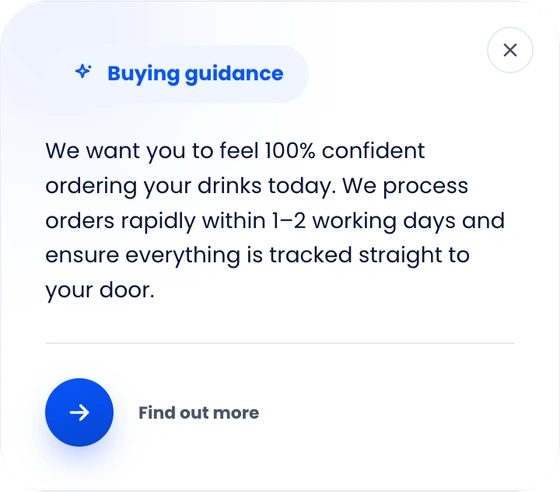
A shopper can be interested in buying and still lack one piece of information. A chat button gives them somewhere to ask; contextual guidance is designed to make useful information easier to find before they do.
The confidence gap
Match the reassurance to the decision.
01 · Product
They revisit the details.
A shopper returns to the material and care information. They may be trying to understand what owning the item involves.
“Checking the fabric and care requirements? Here’s what this item is made from and how to look after it.”
Use the actual product facts. Answer the concern without repeating the entire description.
02 · Category
They are learning the language.
A shopper explores an unfamiliar category and returns to its overview. They may need a starting point before choosing an item.
“Choosing your first carry-on? Here’s what dimensions, capacity and weight mean when planning what to pack.”
Explain the category. Product dimensions alone do not establish airline approval.
03 · Reviews
They want evidence, not another claim.
A shopper moves between the product details and review content. They may want to understand everyday use.
“Looking for everyday-use feedback? Here are customer reviews discussing comfort and care.”
Use genuine reviews available in approved knowledge. Preserve their meaning; do not invent consensus.
04 · Delivery
They check the practicalities again.
A shopper revisits an item after reading delivery information. The missing answer may concern whether the options fit their plans.
“Checking delivery before you decide? Here are the published options and dispatch conditions for this item.”
Preserve the conditions. Establish missing details; never present an estimate as a guaranteed arrival.
05 · Returns
They want to understand the risk.
A shopper returns to the item after checking the returns policy. They may need clarity about choosing incorrectly.
“Want to check your options if it isn’t right? Here are the returns conditions that apply to this item.”
Explain applicable conditions and exclusions. Do not turn a conditional policy into unconditional returns.
Not every pause needs a prompt
Recognise a possibility.
Respect the shopper.
These patterns are clues, not certainty. The answer should fit the available knowledge and the merchant’s rules, while the shopper remains free to continue without a conversation.
Sometimes the right decision is to stay quiet. Sometimes a clearer product page or policy helps more people than another message.